
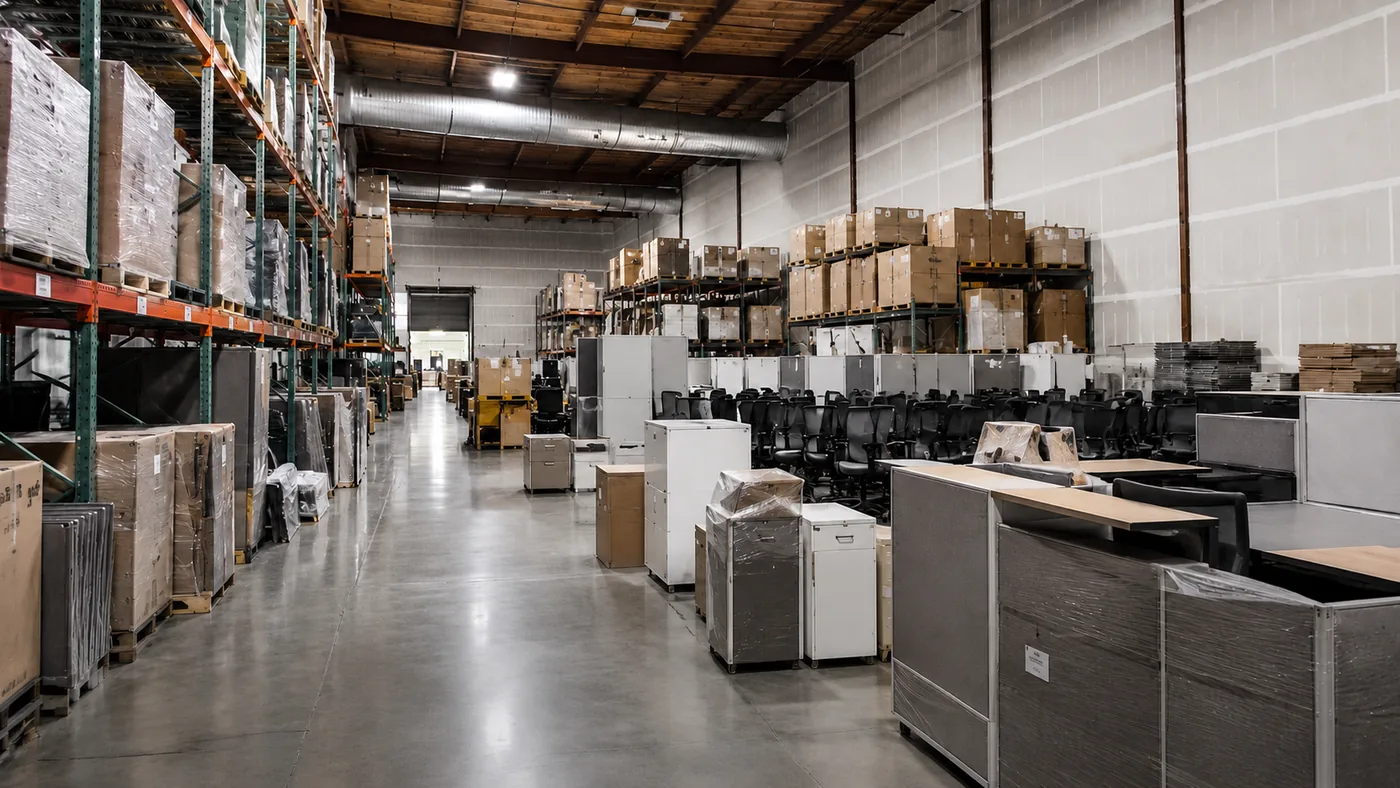
If your company is downsizing, you probably have more furniture than the new office can use. You can sell the used office furniture and recover some money, but decide what you are keeping and what you are storing before you ask for offers. Buyers can only price the furniture you are ready to let go.
What Should I Keep for the Smaller Office?
Start with the space you are keeping. Count the people who will work there on a normal day, list the rooms they need, and lay out the smaller floor before you sell anything. Reusing furniture you already own in the smaller office costs less than buying new pieces for it.
Reliant’s interiors team handles office space planning for the smaller footprint, and our crew reconfigures the workstations, storage, and conference tables you keep to fit the new layout.
Should I Store Office Furniture Instead of Selling It?
Store it if your company has other offices or expects to hire again within a year or two. Used office furniture sells for a fraction of its price new. Sell forty desks this year and hire again next year, and you pay full price for forty new ones. But storage costs money every month, so if you will not need the furniture for more than a year or two, storing it can cost more than buying new.
Reliant runs its own warehouse, where we store and track office furniture between projects. We keep an inventory of everything we store, and we deliver and install it when you need it back. A company with more than one office can move chairs and desks from the smaller office to one that is adding staff.
What Is My Used Office Furniture Worth?
Resale value depends on the brand, the age, the condition, and how many matching pieces you have. Forty identical workstations from one known manufacturer are easier to sell than a mix of desks bought over ten years.
Old cubicle panels and worn laminate desks may bring little or nothing, and some buyers will take them only if the removal is part of the deal. The sale will usually cover only part of the cost of clearing the space.
How Do I Get a Price for My Office Furniture?
Before you sell used office furniture, build an inventory. For each type of item, list the quantity, the manufacturer, and the condition. Add photos, and the model number if a label shows one. A buyer will ask for this list before making an offer. If you keep or store part of the furniture, use the same list to track it.
Then send the inventory to more than one buyer. Office furniture dealers and liquidators can each make an offer. In the Seattle area, our sister company Ducky’s Office Furniture buys used office furniture and can make one too. Ask each of them:
- Which items will you buy, and at what price?
- Which items will you leave behind?
- Who removes the furniture, and on what date?
A liquidator may take only the best pieces. Anything the liquidator does not take still has to be out before your lease deadline.
What Happens After I Accept an Offer?
Most sales run in this order:
- You agree on a pickup date that fits the lease end date.
- The buyer’s crew takes the workstations apart, wraps the furniture, and loads it.
- Payment arrives on the terms you agreed, typically after the buyer inspects the furniture.
- Anything left over is removed, recycled, or thrown away.
Downtown building management often limits freight elevator and loading dock work to nights and weekends. If part of the floor stays occupied, schedule the pickup around the people still working there.
What Do I Do With Furniture Nobody Buys?
Recycle what you can. Metal, wood, and some panel systems can go to a recycler instead of a landfill, and a company sustainability policy may require it. Some charities and schools accept donated office furniture. Most take only certain items, and they pick up on their own schedule. Dispose of whatever is left.
Computers, printers, and anything else that stores data need to be wiped or destroyed under your own IT policy, either before they leave the building or at a secure facility. Leased equipment goes back to the vendor under the terms of its lease.
How Far Ahead Should I Start?
We suggest starting at least 90 days before the space has to be empty. Clearing a floor takes days once the plan is set. Deciding where each piece goes takes longer, and buyers need time to review the inventory and schedule a pickup.
If you are leaving the office entirely, our office decommissioning checklist covers the rest of the process, including the lease requirements and the landlord walkthrough.
Can One Company Handle My Whole Downsize?
Downsizing can involve a planner, installer, liquidator, storage company, recycler, and cleaning crew, and someone on your team has to keep all of them on schedule. Reliant can do every part of it, from the new layout to recovering furniture for resale or redeployment. We also handle the recycling, e-waste, and disposal, and our crew leaves the space broom clean for the landlord.
Reliant works from its Greater Seattle base, with crews throughout Washington, down the West Coast, and on projects across the country.
If your company is downsizing, send us the address, the square footage, and the date the space has to be empty.